

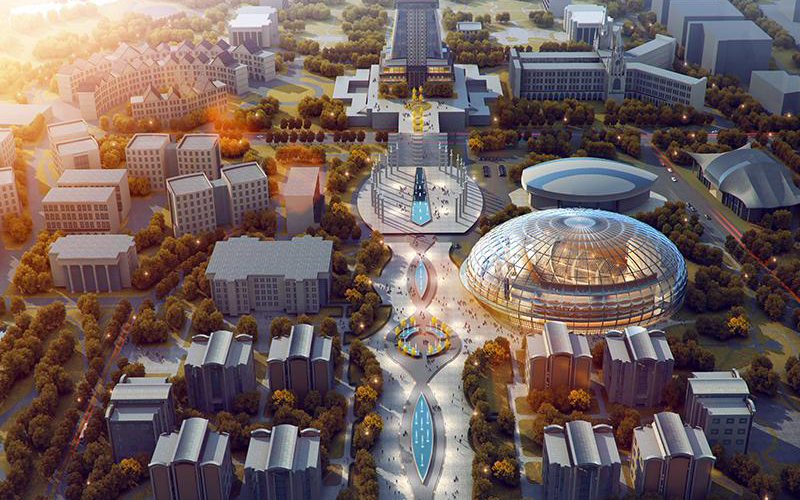
In the era of global sustainable development, the construction industry is actively exploring green transformation. ETFE membrane structures, with their excellent performance and eco-friendly properties, have rapidly emerged as a new star in architecture, earning the reputation of a “breathable and ecological building.” But what makes ETFE membrane structures so unique and suitable for modern sustainable architecture?
Eco-Friendly Materials: The Foundation of Sustainable Architecture
The core material of ETFE membranes is ethylene-tetrafluoroethylene copolymer, a highly recyclable and environmentally friendly material. Its production consumes only a quarter of the energy required for traditional glass, significantly reducing carbon emissions. With a lifespan of over 30 years, ETFE membranes reduce material waste over the building’s lifecycle, supporting sustainable and green architecture. This durability also contributes to cost efficiency, making ETFE a smart long-term investment.

High Light Transmission and Energy Efficiency: Perfect Integration of Nature and Technology
ETFE membranes boast up to 95% light transmission, allowing sunlight to enter interiors evenly and creating bright, comfortable spaces. Compared with traditional glass, ETFE membranes have superior insulation, reducing indoor heat loss and cutting air conditioning energy consumption by over 30%.
By adjusting membrane thickness and coatings, ETFE membranes can also achieve smart shading, precisely controlling light and heat entry, ensuring optimal indoor comfort.
Lightweight and Durable: Combining Innovation with Practicality
ETFE membranes weigh only 1/100th of glass, making installation more convenient and reducing the need for heavy steel support structures. Their excellent mechanical properties allow them to withstand high pressure and impact, ensuring structural stability even under extreme weather conditions. These characteristics make ETFE membrane structures safe, durable, and economical, offering versatile solutions for eco-friendly architecture.

Self-Cleaning and Low Maintenance: Environmentally Friendly Choice
The surface of ETFE membranes features a self-cleaning coating. Rainwater naturally washes away dust and dirt, keeping the membrane clean and maintaining its aesthetic appeal.
Compared with traditional buildings, ETFE membrane structures have maintenance costs as low as 20% of conventional materials. Reduced chemical cleaning agents also protect the environment, making ETFE an ideal choice for sustainable, low-maintenance construction.
Wide Applications: A Pioneer in Green Architecture
ETFE membrane structures have been widely adopted in various sectors:
-
Sports Venues: Wuxi Olympic Sports Center, Chongqing Longxing Football Stadium
-
Commercial Complexes: Hangzhou Bodosen Valley, Jiaxing Changanli Commercial Street
-
Agriculture and Greenhouses: Greenhouses, shading facilities
Their combination of aesthetics, comfort, and energy efficiency not only meets functional needs but also enhances the ecological value of buildings.
Future Prospects: Leading the Green Building Revolution
ETFE membrane structures represent the future of sustainable and eco-friendly architecture. With advancements in technology and increasing environmental awareness, their application is set to expand further. Lightweight, energy-efficient, durable, and intelligent, ETFE membrane structures are shaping the next generation of ecological architecture.
Let’s work together to promote sustainable construction and contribute to protecting our planet.